Skip to content

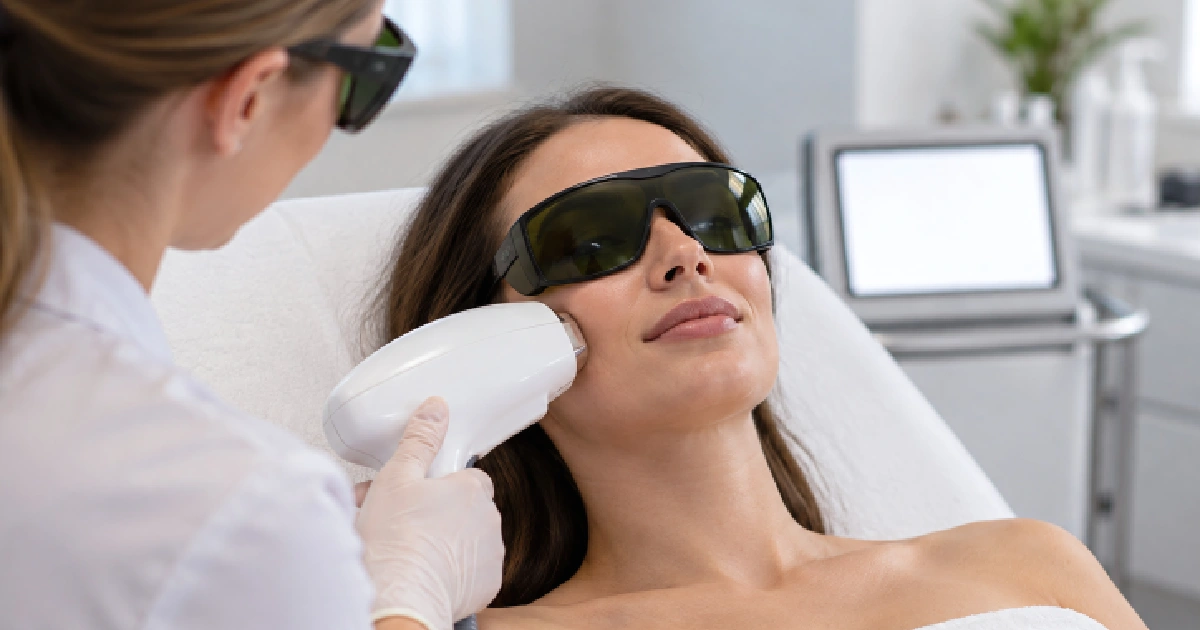
Table of Contents
If you have been studying your reflection under bathroom lighting and quietly cataloging spots, redness, or patches of uneven tone that never quite even out, you are in good company. Most people who ask about IPL Treatment in Woodmere, Ohio at EG Aesthetics come in with one specific thing in mind, then realize they have been living with three or four small concerns at once.
Who is a good candidate for IPL treatment?
IPL relies on contrast between pigment and surrounding skin, so it works most predictably on lighter tones and requires caution on deeper ones. Providers use the Fitzpatrick scale, I (very fair) through VI (very dark), to judge fit. Recent tanning, pregnancy, photosensitizing medications, active infection, and keloid history also matter. At EG Aesthetics, candidacy is a consultation decision, not a self-assessment you make alone.
How IPL Works on Pigment and Redness
IPL light therapy uses broad-spectrum light rather than a single wavelength, so one device can address several concerns in one session. Intense pulsed light (IPL) is filtered to deliver a range of wavelengths at different depths, & that flexibility is the whole point of the technology.
Once that light enters the skin, two things absorb most of it: melanin, the brown pigment responsible for spots and discoloration, and hemoglobin, the red inside tiny blood vessels. Those targets convert the light into gentle heat; the pigment clusters & vessel walls break down, and your body clears them over the next few days while leaving the surrounding skin largely alone.
That is the simplest way to predict whether a concern will respond. If you can see it because of its color, IPL skin treatment can usually reach it. Unlike a resurfacing laser, which treats the skin surface, IPL targets what lies beneath.
Sun Spots, Age Spots, and Uneven Skin Tone
Sun-related pigment is the most common reason patients ask about IPL for dark spots. That includes solar lentigines, the flat brown spots often called age spots, scattered freckling, and the general dullness that builds from years of UV exposure. Because these appear on the face, neck, chest, & hands, people often use IPL for sun damage across all four areas.
The fading process can surprise people, so it helps to know what to expect. Treated spots often darken for a few days and take on a coffee-ground look before they flake away. That’s pigment rising to the surface, a normal part of how IPL for uneven skin tone works.
In the Woodmere and greater Cleveland area, sun damage can hide through a long gray winter and then show up after a summer on the water or out on the course. Most patients see gradual clearing over a short series of sessions, & because new sun exposure creates new pigment, daily sunscreen protects the results.
Facial Redness, Rosacea, and Broken Capillaries
The vascular side of IPL skin rejuvenation is the half most people do not know about. IPL can soften diffuse flushing, persistent redness across the cheeks and nose, and telangiectasias, the small visible surface vessels that tend to collect around the nostrils and chin.
Research on IPL for rosacea-related redness is reasonably well established, with most studies reporting improvement in erythema & visible vessels. The FDA has cleared IPL devices to treat benign vascular and pigmented lesions, including rosacea-related redness.
One honest note matters here. Rosacea is a chronic condition that gets managed rather than cured, so maintenance sessions are typically part of the plan, and your dermatologist still oversees the condition itself. An IPL photofacial can help improve the appearance of redness.
Acne Marks, Post-Acne Discoloration, and Active Breakouts
Post-inflammatory hyperpigmentation, the brown or pink marks a breakout leaves behind after it heals, responds to IPL because those marks are pigment and lingering vascular activity. If you have ever felt the aftermath lasted longer than the pimple did, this is exactly what it addresses.
Certain IPL wavelengths also reach the bacteria and inflammation involved in active acne, so an IPL facial treatment is sometimes used as a supporting piece alongside a broader plan rather than as a standalone fix.
There is a clear boundary worth naming. Textural acne scarring, meaning pitted or indented skin, is a structural problem. Light alone does not rebuild that, and microneedling or a resurfacing option like LaseMD ULTRA™ is usually the better route.
Fine Lines, Texture, and Overall Skin Quality
The gentle heat also stimulates collagen in deeper layers, which, over a series, can soften fine lines and refine overall skin texture. Many patients describe the change as their skin simply looking clearer and more awake.
Keep the scope realistic. This is a gradual improvement in skin quality, not a lifting or tightening treatment. If firmness & laxity are your main concerns, a different approach will serve you better, and we can discuss that at your consultation.
What IPL Does Not Treat Well
Knowing the limits is part of making a confident decision. IPL is generally not the right tool for:
- Deep wrinkles and significant skin laxity, which call for volume or energy-based tightening instead
- Pitted acne scarring and raised or keloid scars
- Hair-bearing areas you want to keep, and tattoos, both of which require different technology
Melasma deserves its own mention because it looks so much like sun damage. It is hormonally driven, can be aggravated by heat, and tends to return, so our provider at EG Aesthetics approaches it carefully and often chooses a gentler protocol or a different treatment altogether.
Get a Personalized Approach to IPL Treatment
Your skin has been telling you something, and you deserve a clear answer about what can actually help. IPL Treatment at EG Aesthetics in Woodmere, Ohio starts with a conversation about your concerns, your skin type, and what is realistic for you. Book Your IPL Treatment Consultation Today and let us take a look together.